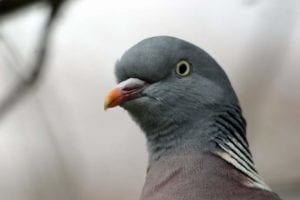
Why do species die out? This is the overarching question being asked by many leading researchers. Knowing more about what leads to a species’ becoming extinct could enable us to do something about it. The passenger pigeon is a famous example and the species has been studied extensively.
The passenger pigeon (Ectopistes migratorius) was once found in huge numbers in North America. Records tell of passing flocks that darkened the skies for several days at a time. The species may have peaked at five billion individuals. A more conservative estimate is three billion.
Within a short time, the species disappeared completely.
“Given the huge size of the population, it’s simply amazing that the species disappeared so quickly,” says Tom Gilbert.
Gilbert is a professor at the University of Copenhagen’s Centre for GeoGenetics, but he also has a part-time position as an adjunct professor at the Norwegian University of Science and Technology (NTNU).
The human role
The history of the passenger pigeon is interesting, partly because it can tell us something about how and why species become extinct.
Native Americans also relied on passenger pigeons for food. But at least in parts of the passenger pigeons’ range, people had learned to harvest the species at a sustainable level that didn’t threaten to eradicate it.
It was common in some parts of North America to only eat young pigeons that were hunted at night, since this did not seem to scare away the adult birds or prevent them from re-nesting.
But starting around 1500, a more aggressive variant of humans came to the continent with the arrival of Europeans. The hunt for passenger pigeons grew and culminated in a massive hunt for the species throughout the 1800s, before the species finally collapsed and disappeared.
So were the Europeans then really the ones to blame for the collapse?
Already headed to oblivion?
In 2014, a study in published in the scientific journal PNAS strongly suggested that humans were simply the final straw in destroying a species that was already vulnerable and headed to oblivion.
The researchers asserted that despite their enormous numbers, the passenger pigeons were already in trouble. The population of the species varied greatly, similar to lemmings, but over a longer period of time.
When the Europeans arrived, the species was already in a strong decline. The population was plummeting long before Europeans arrived, and perhaps Europeans even contributed to a short-term increase in numbers.
Studies of the genetic variation of the species using an investigative method called PSMC formed the background for these assertions. And now we have to concentrate a bit.
From one to many
All of an individual’s genes are called a genome. You have a genome, your mom has her own genome, your dog has one and the neighbour’s cat has yet another. These can be broken down into chromosomes and genes and base pairs, but you only have a single genome.
So, all of your chromosomes and genes are found in this one genome, but at the same time this genome is unique to just you and only you. Unless, that is, you have an identical twin or are a termite or belong to another species where the individuals are largely identical clones. (In the last case, it’s remarkable that you can read this.)
Here is the crux of the matter:
The PSMC method can use the information in the genes of a single individual of a species to map the history of the species.
You should therefore be able to see how the species developed over many generations, and estimate how many individuals there were at any given time, all based on a single genome.
Humans partially off the hook
Using this method, researchers found that the number of passenger pigeons was in free fall even before the arrival of the Europeans.
Although the species might not have become extinct, it would have shrunk significantly in any case, maybe to only a few hundred thousand individuals.
People were just the final factor in their demise. We may have pushed the passenger pigeons off the cliff, but the species was already on its way there.
So — according to the researchers behind the study in PNAS — it wasn’t just the Europeans’ fault.
It sounds almost too good to be true that you can come up with something so definitive based on information from just one or a few individuals. And in this case it is — at least if we’re to believe a new study that has recently been published in the journal Science.
Ineffective for passenger pigeons
The problem is that the PSMC method can’t be used on passenger pigeons. The new research in Science provides completely different results.
Leading molecular biologist Beth Shapiro is the main author of the Science article, and Tom Gilbert is one of the study’s contributors.
PSMC is based on the assumption that genetic variations occur relatively evenly all along the chromosomes that constitute the genome. That is, genetic changes are equally likely to occur at the ends of a chromosome as in the middle. But this turns out not to be the case for this species.
“Passenger pigeons don’t have the variation patterns that we’d expect, because of the strong selection on genes that appear to have been important throughout the species’ history. So it doesn’t work to use PSMC in this case,” said Gilbert.
In passenger pigeons, most of the genetic diversity was found at the ends of the chromosome. The middle of the chromosome showed little variation from one generation to the next as a result of the selection on these genes.
This fact may not sound revolutionary, but it yields completely different results if you try to read the history of the species based on the genome of a single individual.
You have to take into account that variations are greatest in certain parts of the chromosome rather than evenly distributed throughout. This makes the PSMC method unusable in this context.
Used another method
The researchers behind the article in Science didn’t use the PSMC method. Instead, they used mitochondrial DNA from 41 passenger pigeons as their starting point. Now we have to concentrate again.
Your DNA is not your only inheritance. Mitochondrial DNA is a distinct, separate inheritance found in certain cells called mitochondria.
Regular DNA is a combination of the inheritance from your father and mother. But mitochondrial DNA is only transmitted from your mother. Variations in mitochondrial DNA also occur due to mutations, and happen relatively consistently over time.
This is a different point of departure for understanding how a species develops over time, and the results can be quite different from those generated using the PSMC method.
In addition, the study presented in Science analysed the entire genomes from four passenger pigeons and compared them with two genomes from band-tailed pigeons (Patagioenas fasciata), one of the closest relatives of the passenger pigeon.
The final result was that the new study ended up with completely different answers about the passenger pigeons and why the species met its demise.
Genetic diversity
The new study is interesting for several reasons. It tells us about the genetic diversity of the passenger pigeon, but also supports an entirely different explanation for the species’ extinction.
Scientists previously believed that the larger the population of a species is, the more genetically diverse it will be. But this theory has turned out to be wrong, as the recent passenger pigeon research has shown.
According to the article in Science, the large population size appears to have enabled passenger pigeons to adapt and evolve more quickly and thus remove harmful mutations.
In species with fewer individuals, chance can cause a less beneficial mutation to persist, but chance plays less of a role in species with greater numbers of individuals.
“Mutations that provide a major evolutionary benefit would spread rapidly,” says Gilbert.
The fact that beneficial mutations became incredibly dominant so quickly simply led to the disappearance of other genetic variants.
This in turn led to the genetic diversity in the passenger pigeon being surprisingly low in relation to the number of individuals. This may have made the species more vulnerable to changes.
But that was not why the passenger pigeon died out.
Our mistake
“The passenger pigeon died out because of people,” is Gilbert’s short version.
The passenger pigeon wasn’t in trouble prior to Europeans arrival in North America. Nothing suggests that the species was struggling in any way.
Perhaps this isn’t that surprising. In the 19th century passenger pigeons were so numerous that there were contests to shoot as many of them as possible during a certain period of time. In one competition, the winner had shot 30 000 birds.
If nothing else, the story of the passenger pigeon has contributed to a greater understanding that even prolific species can become extinct.
Something to learn
The large grasshopper Melanoplus spretus from the western United States suffered the same fate. It went from a population of several trillion to zero in a few decades, possibly because farmers destroyed its breeding grounds. In Norway and across the whole of the North Atlantic, the great auk (Pinguinus impennis) died out after people harvested them in large numbers.
People ate passenger pigeons in huge amounts, but they were also killed because they were perceived as a threat to agriculture. As Europeans migrated across North America, they thinned out and eliminated the large forests that the pigeons depended on. The pigeons lived primarily on acorns.
As the species was already dying out, 250,000 birds — the last big flock — were shot on a single day in 1896. That same year, the last passenger pigeon was observed in Louisiana. It was also shot.
The pigeons were probably dependent on a large flock size to reproduce. Their instincts didn’t work when only a few individuals remained here and there.
The last passenger pigeon died in the Cincinnati Zoo in 1914.
Pigeon Patrol Products & Services is the leading manufacturer and distributor or bird deterrent (control) products in Canada. Pigeon Patrol products have solved pest bird problems in industrial, commercial, and residential settings since 2000, by using safe and humane bird
deterrents with only bird and animal friendly solutions. At Pigeon Patrol, we manufacture and offer a variety of bird deterrents, ranging from Ultra-flex Bird Spikes with UV protection, Bird Netting, 4-S Bird Gel and the best Ultrasonic and audible sound devices on the market today.
Voted Best Canadian wholesaler for Bird Deterrent products ten years in a row.
Contact us at 1 877-4-NO-BIRD,(604) 585-9279 or visit our website at www.pigeonpatrol.ca
Pigeon/Pigeon Patrol / Pigeons Roosing / Vancouver Pigeon Control / Bird Spikes / Bird Control / Bird Deterrent / PIgeon Deterrent / Surrey Pigeon Control / Pest / Seagull deterrent / Vancouver Pigeon Blog / Birds Inside Home / Pigeons in the cities / Ice Pigeons / What to do about pigeons / sparrows, Damage by Sparrows, How to Keep Raccoons Away, Why Are Raccoons Considered Pests / De-fence / Pigeon Nesting / Bird Droppings / Pigeon Dropping / woodpecker control / Professional Bird Control Company / Keep The Birds Away / Birds/rats/seagull/pigeon/woodpecker/dove/sparrow/pidgeon control/pidgeon problem/pidgeon control/flying rats/pigeon problems/ bird netting/bird gel/bird spray/bird nails/bird guard
The politicians are seated in a semi-circle at a meeting of the council. One by one, they raise their voices as part of the deliberation. “I believe it is time we took a position on this,” says a black-blazered woman. “It’s not an industry that I want to support,” a second woman, wearing dark-rimmed glasses, reads into the official record.
“It’s time,” concludes the mayor, donning the heavy chain that is the insignia of his office, “to end the practice in our community.”
It is a fall meeting of the District of North Vancouver’s city council and they are discussing whether people should be allowed to keep pigeons. Councillors Lisa Muri, in the blazer, and Megan Curren, with the glasses, ultimately vote with the mayor in favour of an outright pigeon ban.
Coun. Matthew Bond, one of those who votes against, says skeptically, “I don’t necessarily see this as a good use of our time.” But the bylaw passes, four to two.
Something smells, though. Only one property in the community is known to harbour pet pigeons. Only one complaint about pigeons, dating back several years, is known to be active. Only one city councillor has recused herself from the discussion. “I have been in a situation like this,” Coun. Betty Forbes says, at the same meeting. “So I’m stepping aside.”
One plus one plus one equals . . . a conflict of interest?
Documents obtained by the CBC under access-to-information seem to bolster that view of events. The “situation” was that Forbes lived next-door to pigeons. That she did not like pigeons. And that after complaining to the city as a private citizen to no avail, she took matters into her own hands; after being elected to council in 2018, in an email to two fellow councillors, she requested a bylaw banning residents from keeping the birds.
Emails viewed by Maclean’s suggest that during the spring, Muri initiated a process to change the district’s pigeon ownership rules, and kept Forbes up to date on its progress. But the whole project has since run into trouble because it turns out Kulwant Dulay, Forbes’ neighbour, cares deeply about his pigeons. He cares enough to go to court.
His petition to B.C. Supreme Court, dated Dec. 4, seeks to have the bylaw declared illegal and set aside. It relies heavily on the CBC’s reporting, referencing emails between Forbes and Muri earlier this year that appear to reveal a plot to hatch the bylaw.
Dulay is arguing that Forbes’s involvement was “biased and bad faith and acting in a conflict of interest,” says Camille Chisholm, a lawyer representing the pigeon enthusiast. The district has retained its own lawyers and was expected to respond in January.
The same week as Dulay’s petition was filed, the District of North Vancouver announced it was tasking former B.C. privacy commissioner David Loukidelis with investigating how the pigeon ban came to be. His review, the district announced, will assess the “awareness” of conflict-of-interest rules by councillors. The process is expected to take a couple of months.
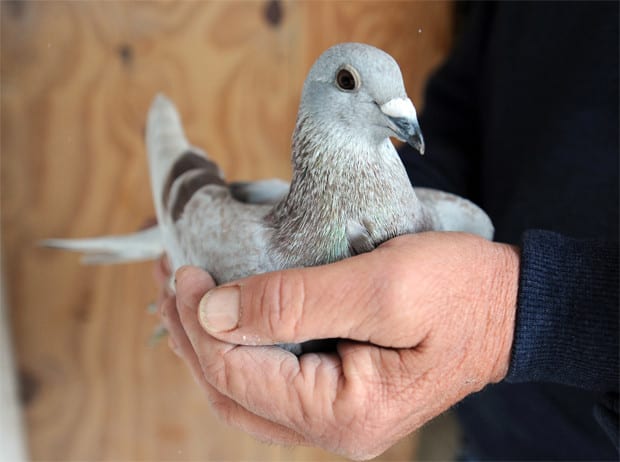
Dulay, Chisholm adds, has kept homing pigeons as pets for years—including during his time in India before he immigrated to Canada. “My neighbours in the front and back, everybody loves my pigeons,” says Dulay, adding that other than Forbes’s, he hasn’t had a complaint in 17 years. “Everybody comes to my house and looks at them. It looks cool, them flying around.” Some have names. One is called “Big Boss.” His favourite pigeon is blue and white. He said it always comes to his hand.
Dulay keeps his 15 birds in a coop that’s about as tall as the backyard fence and roomy enough for him to enter and move around. During the warmer months, he lets them out to fly around the neighbourhood, including over other people’s yards. He said they always return.
Lately, he has wondered whether Forbes has a problem with him, not his pigeons. He said she “never talks” to him, and notes that he has never complained about her two barking dogs, though he believes he might have reason to.
His across-the-street neighbour, meanwhile, has spoken in his support. “I’ve had opportunity to go over and see the coop,” Krista Page told council on Nov. 18. ”It is clean. There’s no foul smell. I’ve never met neighbours that keep a tidier driveway and home and everything.” Page noted there have been no complaints from the Dulays’ other next-door neighbour, adding: “I just feel that this is very much a misuse of power.”
Forbes declined an interview request from Maclean’s but insisted in an email that there is “another set of correct facts” to the story. “However, because the mayor has requested an inquiry of all council and himself,” the email added, “I am unable to make any comments at this time.”
Her only public response came at the end of the same meeting Krista Page attended. “If I have erred in any way,” she said, “I assure council and the community that it was done inadvertently and in good faith with my understanding, as a new councillor, of the conflict-of-interest rules.”
Muri echoed Forbes in an email to Maclean’s, saying: “We are currently reviewing the process of this bylaw, so it would be inappropriate for me to comment.” But a response to the petition later filed in court by her lawyers denies the councillor was aware of any interest Forbes could’ve had in a pigeon ban beyond one “in common with electors of the municipality generally.”
The submission argues that neither councillor stood to gain financially from the bylaw and doubles down on the councillors’ position that the ban is legitimate and serves to protect residents from current and future pigeon keepers who might “adversely impact them or their property.”
To some, this is more than a dispute between neighbours. Givo Hassko, who is on the board of the Vancouver Poultry & Fancy Pigeon Association, told council in November he believed this was a test case for corruption in Canadian politics writ large. “If there are no consequences to how council goes to change bylaws here locally or Canada-wide,” he said, “then anyone—anyone—would get a green light.”
Hassko set up a GoFundMe to help with Dulay’s legal fees. At the time of writing, it had raised $700. A single commenter named Wayne, who pitched in $55, offered this input: “It is important that pigeons are not homeless.”
Pigeon Patrol Products & Services is the leading manufacturer and distributor or bird deterrent (control) products in Canada. Pigeon Patrol products have solved pest bird problems in industrial, commercial, and residential settings since 2000, by using safe and humane bird
deterrents with only bird and animal friendly solutions. At Pigeon Patrol, we manufacture and offer a variety of bird deterrents, ranging from Ultra-flex Bird Spikes with UV protection, Bird Netting, 4-S Bird Gel and the best Ultrasonic and audible sound devices on the market today.
Voted Best Canadian wholesaler for Bird Deterrent products ten years in a row.
Contact us at 1 877-4-NO-BIRD,(604) 585-9279 or visit our website at www.pigeonpatrol.ca
Pigeon/Pigeon Patrol / Pigeons Roosing / Vancouver Pigeon Control / Bird Spikes / Bird Control / Bird Deterrent / PIgeon Deterrent / Surrey Pigeon Control / Pest / Seagull deterrent / Vancouver Pigeon Blog / Birds Inside Home / Pigeons in the cities / Ice Pigeons / What to do about pigeons / sparrows, Damage by Sparrows, How to Keep Raccoons Away, Why Are Raccoons Considered Pests / De-fence / Pigeon Nesting / Bird Droppings / Pigeon Dropping / woodpecker control / Professional Bird Control Company / Keep The Birds Away / Birds/rats/seagull/pigeon/woodpecker/dove/sparrow/pidgeon control/pidgeon problem/pidgeon control/flying rats/pigeon problems/ bird netting/bird gel/bird spray/bird nails/bird guard
A native green and bronze wood pigeon with a taste for fermented fruit has been named the 2018 bird of the year in New Zealand.
The kererū is endemic to the country and can be found in both the North and South islands, living in cities as well as rural areas. Although quiet and reclusive by nature, kererū have earned a reputation as the drunkest bird in New Zealand, and been known to fall from trees after consuming rotting fruit left lying on the ground. During the summer when fruit is in abundance drunk kererū are sometimes taken to wildlife centres to sober up.
Described by conservation group Forest and Bird as “clumsy, drunk, gluttonous and glamorous,” the Kererū population is not endangered, but is vulnerable to attacks by predators such as feral cats and stoats, and also competes with possums for food.
Kererū play a vital role in dispersing the seeds of native New Zealand species such as karaka, miro, tawa and taraire across large areas, because they are one of the few birds large enough to swallow the fruit whole.
It was the clear leader in the poll, with 5,833 votes. The kākāpō came second with 3,772 and the Kakī or black stilt, an extremely rare bird that is raised by hand, coming third with 2,995 votes.
The kererū has been known to fall out of the occasional tree. Photograph: Ross Land/Getty Images
The competition, organised by Forest and Bird, is in its 14th year, and pits the country’s rare and endangered birds against one another. No bird has won twice, and this year saw the highest voter turnout on record, despite 2,000 votes being discarded after they were found to be fraudulent and originating from Australia.
More than 48,000 votes were cast this year, up from 41,000 in 2017.
Overseas celebrity endorsements from Stephen Fry for the kākāpō, and comedian Bill Bailey for the takahē upped the stakes in this year’s competition, with bird of the year also featuring on Tinder for the first time, with Shelly the kakī, or black stilt, attracting 500 matches across the country.
Although she voted for the black petrel (tāiko), prime minister Jacinda Ardern quickly offered the kererū her congratulations.
“The kererū is one of our most recognisable birds, it is often heard before it is seen,” Forest & Bird’s Megan Hubscher told Radio NZ. “It is one of our few birds that is doing OK. Only one in five of New Zealand’s native birds are increasing in number or stable, 80% are decreasing. But the kererū is doing pretty well.”
Hubscher said there were some regions of the country where kererū was not doing well – including Northland – and this was largely down to poor predator control.
However in other parts of the country where populations are thriving – such as the capital city of Wellington – road signs warn motorists to be careful because of flying kererū, which can cause serious damage because of their size and weight.
Kererū used to be hunted for their meat and feathers, but they are now protected and it is illegal to hunt them.
Some Māori tribes are given permission by the department of conservation to use the bones and feathers of kererū for cultural reasons, and reports ofthe birds being eaten for special occasions arise occasionally.
There are 168 bird species in New Zealand and about a third are threatened with extinction, with dozens more on the endangered list. Some species have dwindled to a few hundred individuals tucked away in isolated pockets of the country.
Pigeon Patrol Products & Services is the leading manufacturer and distributor or bird deterrent (control) products in Canada. Pigeon Patrol products have solved pest bird problems in industrial, commercial, and residential settings since 2000, by using safe and humane bird
deterrents with only bird and animal friendly solutions. At Pigeon Patrol, we manufacture and offer a variety of bird deterrents, ranging from Ultra-flex Bird Spikes with UV protection, Bird Netting, 4-S Bird Gel and the best Ultrasonic and audible sound devices on the market today.
Voted Best Canadian wholesaler for Bird Deterrent products ten years in a row.
Contact us at 1 877-4-NO-BIRD,(604) 585-9279 or visit our website at www.pigeonpatrol.ca
Pigeon/Pigeon Patrol / Pigeons Roosing / Vancouver Pigeon Control / Bird Spikes / Bird Control / Bird Deterrent / PIgeon Deterrent / Surrey Pigeon Control / Pest / Seagull deterrent / Vancouver Pigeon Blog / Birds Inside Home / Pigeons in the cities / Ice Pigeons / What to do about pigeons / sparrows, Damage by Sparrows, How to Keep Raccoons Away, Why Are Raccoons Considered Pests / De-fence / Pigeon Nesting / Bird Droppings / Pigeon Dropping / woodpecker control / Professional Bird Control Company / Keep The Birds Away / Birds/rats/seagull/pigeon/woodpecker/dove/sparrow/pidgeon control/pidgeon problem/pidgeon control/flying rats/pigeon problems/ bird netting/bird gel/bird spray/bird nails/bird guard
Pigeon Patrol Products & Services is the leading manufacturer and distributor or bird deterrent (control) products in Canada. Pigeon Patrol products have solved pest bird problems in industrial, commercial, and residential settings since 2000, by using safe and humane bird
deterrents with only bird and animal friendly solutions. At Pigeon Patrol, we manufacture and offer a variety of bird deterrents, ranging from Ultra-flex Bird Spikes with UV protection, Bird Netting, 4-S Bird Gel and the best Ultrasonic and audible sound devices on the market today.
Voted Best Canadian wholesaler for Bird Deterrent products ten years in a row.
Contact us at 1 877-4-NO-BIRD,(604) 585-9279 or visit our website at www.pigeonpatrol.ca
Pigeon/Pigeon Patrol / Pigeons Roosing / Vancouver Pigeon Control / Bird Spikes / Bird Control / Bird Deterrent / PIgeon Deterrent / Surrey Pigeon Control / Pest / Seagull deterrent / Vancouver Pigeon Blog / Birds Inside Home / Pigeons in the cities / Ice Pigeons / What to do about pigeons / sparrows, Damage by Sparrows, How to Keep Raccoons Away, Why Are Raccoons Considered Pests / De-fence / Pigeon Nesting / Bird Droppings / Pigeon Dropping / woodpecker control / Professional Bird Control Company / Keep The Birds Away / Birds/rats/seagull/pigeon/woodpecker/dove/sparrow/pidgeon control/pidgeon problem/pidgeon control/flying rats/pigeon problems/ bird netting/bird gel/bird spray/bird nails/bird guard
With less than six months before the District of North Vancouver’s pigeon prohibition takes effect, bird buffs and transparency watchdogs beseeched council on Monday to take a second look at the bylaw.
Council’s recent decision to bar residents from owning or harbouring pigeons anywhere in the district was a misuse of power, according to Guy Trotter, who previously served as a volunteer on the district’s official community plan monitoring committee.
The bylaw hurts one pigeon-keeping resident, Kulwant Dulay, and helps one pigeon-opposed resident, Coun. Betty Forbes, according to Trotter. The councillor was the only district resident to file a recent complaint about pigeons, Trotter added.
“I don’t care about pigeons one way or the other,” Trotter told council. “I do, however, care about good governance.”
The pigeon issue was first broached in a district public hearing on backyard chickens in May 2017 when Forbes, prior to winning a seat on council, asked council to re-examine their 1971-era pigeon bylaw.
“We have a pigeon bylaw?” responded a surprised then-mayor Richard Walton.
Allowing it might sound cold, Forbes suggested banning pigeons due to the possibility the birds would depress real estate values. Forbes explained she’d spent a lot of money to keep her backyard “prim and proper,” but her attempts to entertain outdoors were marred by the sight of her neighbour’s “ramshackle” pigeon coop.
Forbes also sent the district a 1,400-word missive outlining her concerns about the keeping of backyard chickens and pigeons.
Forbes was elected to council in 2018. But before being sworn in, Forbes sent an email complaining about the pigeons to district staff and requesting a remedy, according to Freedom of Information documents provided to CBC News. From April to June of 2019, Forbes and Coun. Lisa Muri had three email exchanges in which the subject line referred to pigeons.
In an April 24, 2019 email, Muri wrote to Forbes: “It will be fine, we can wave (sic) the hearing . . . if we need one.”
Council voted 4-2 to ban pigeons, with Couns. Mathew Bond and Jordan Back opposed. Forbes recused herself from council discussions and votes on the subject.
However, her emails were the subject of scrutiny for lawyer and district resident Vincent Santacroce.
“She and Coun. Muri exchanged cryptic emails about the matter,” he told council on Monday.
“I don’t believe ‘cryptic’ is appropriate,” Muri responded.
“I’ll give you a dictionary,” Santacroce replied.
The bylaw was both rushed and sloppy, according to Santacroce.
“Why was there the need for such an overhaul?” he asked. “Was there a pigeon scourge on the district worthy of an Alfred Hitchcock movie?”
Addressing criticism at the end of Monday’s meeting, Forbes offered a two-minute statement in which she mentioned the word “pigeon” once.
“If I have erred in any way I assure council and the community that it was done inadvertently and in good faith with my understanding, as a new councillor, of the conflict of interest rules,” Forbes said.
Forbes requested “additional training” for herself and her council colleagues on the issues of conflict of interest and freedom of information.
Following the meeting, Kulwant Dulay seemed distressed at what might happen to his pigeons but said he’ll try to persuade council at future meetings.
“If nothing happens . . . I’ll hire a lawyer,” he said.
Forbes received strong support from frequent council watcher Corrie Kost as well as 2018 council candidate Peter Teevan.
After explaining that a Google search revealed pigeons are classified as pests due to their ability to spread disease, Teevan defended Forbes’ actions.
“As a matter of happenstance, Ms. Forbes became Coun. Forbes and she did the proper thing according to conflict of interest regulations,” he said.
The bylaw will benefit district residents, according to Kost.
“Any one of us could have been negatively impacted then, and in the future,” he said.
Council should re-examine their decision, countered Andy Hansen, who said he has raised pigeons for most of his life.
“We get a lot of peace and love out of [keeping pigeons],” he told council.
Council failed to distinguish between feral pigeons, which might perch on a neighbour’s roof, and homing pigeons, which are trained to return to their coop, Hansen explained.
“They’re pets,” he said. “We have feral cats everywhere too. Do we ban all cats?”
Dulay’s coop is clean and tidy, according to Lynn Valley resident Krista Page.
Page spoke at council in support of her neighbour Dulay. In the spirit of community, it’s vital to try to “work things out as neighbours,” she told council.
Forbes’ comments on the issue were both vague and disappointing, according to Vancouver Poultry and Fancy Pigeon Association director Givo Hassko.
“I’m glad that I don’t live next door to a council member,” he said.
Pigeon Patrol Products & Services is the leading manufacturer and distributor or bird deterrent (control) products in Canada. Pigeon Patrol products have solved pest bird problems in industrial, commercial, and residential settings since 2000, by using safe and humane bird
deterrents with only bird and animal friendly solutions. At Pigeon Patrol, we manufacture and offer a variety of bird deterrents, ranging from Ultra-flex Bird Spikes with UV protection, Bird Netting, 4-S Bird Gel and the best Ultrasonic and audible sound devices on the market today.
Voted Best Canadian wholesaler for Bird Deterrent products ten years in a row.
Contact us at 1 877-4-NO-BIRD,(604) 585-9279 or visit our website at www.pigeonpatrol.ca
Pigeon/Pigeon Patrol / Pigeons Roosing / Vancouver Pigeon Control / Bird Spikes / Bird Control / Bird Deterrent / PIgeon Deterrent / Surrey Pigeon Control / Pest / Seagull deterrent / Vancouver Pigeon Blog / Birds Inside Home / Pigeons in the cities / Ice Pigeons / What to do about pigeons / sparrows, Damage by Sparrows, How to Keep Raccoons Away, Why Are Raccoons Considered Pests / De-fence / Pigeon Nesting / Bird Droppings / Pigeon Dropping / woodpecker control / Professional Bird Control Company / Keep The Birds Away / Birds/rats/seagull/pigeon/woodpecker/dove/sparrow/pidgeon control/pidgeon problem/pidgeon control/flying rats/pigeon problems/ bird netting/bird gel/bird spray/bird nails/bird guard