by Pigeon Patrol | Oct 20, 2021 | Pigeon Droppings, Pigeon Patrol's Services, Pigeon Predators, Pigeon Spikes, Pigeons, Pigeons in the News
Pigeons, crows, sparrows, and other birds welcoming you on your porch isn’t a warm greeting. Instead, it will give you headaches due to the smelly droppings and pecking that your porch has endured. And for sure, this situation of your porch isn’t inviting for your future guests. You have to do something and find ways to get rid of birds on the porch before it affects your household and social interaction.
This might sound a bit too much, but birds flocking to your porch sets the image to what your house is from the inside. Remember the trite saying, “first impression lasts”? This is true to some extent because your porch is the first part of your house that people will step into. If it reeks of droppings, it would be an unsightly (and unsanitary) welcome.
But fret not if you’re one of the victims of the notorious bird nesting, dropping, and pecking. There are easy hacks that you can do to send the fowls away. Here are some that you can try at the soonest possible time:
1. REMOVE ANY MATERIALS THAT CAN BE USED AS A NEST
One reason why birds keep flocking on your porch is the presence of materials they use for nest building. Remove dried leaves, twigs, and anything that can be possibly used as a building block of a nesting place. The birds may not intentionally plan to poo on your porch, but it happened otherwise. Try keeping your porch clean of the dried leaves and see if it will have a difference.
Another thing you should check is if your yard tree branches extend near your house’s structure. If yes, chances are this is the reason why the birds keep hanging out on your porch and leaving some unsightly souvenirs. Trim these parts and let the direct light shine into your porch if possible. This will remove the dropping smell after some days as ways to get rid of birds on the porch.
If there’s already a nest on your porch, try calling a wildlife remover to expertly relocate the birds.
2. PLACE A BIRD FEEDER AWAY FROM YOUR PORCH
For once, stop feeding the birds and then complain about the droppings they leave on your porch. Feeding the fowls don’t just make them poop, they also keep them coming back. If the birds still haven’t stopped landing on your doorstep, place a feeder somewhere in your backyard where they can be less invasive. However, this will still leave some bird droppings you’ll have to clean later on.
Some homeowners aren’t worried about getting the hidden parts their yard get dirty as long as the porch stays pristine. To add another diversion to the perching birds, add a birdbath near the feeder so the fowls would be isolated within one area.
Don’t forget to remove any food sources on your porch, otherwise, the birds will also peck on it even in the presence of a separate feeder. That’s one of the crucial ways to get rid of birds on the porch.
3. INSTALL A REPELLENT DEVICE
If all else fails and you don’t have the patience to perform some diversion tactics, go straight to business by installing a bird repellent device. This gadget can either be battery or electricity powered and will emit high-frequency sounds that the birds will find annoying. Upon turning on the device, the birds will fly away due to the unbearable sound only animals can hear.
The only downside here is if you have a roaming cat, the high-frequency sound can also annoy them. Nevertheless, the sound is short-waved and cannot pass through thick walls. Your furball is safe when it’s on another room.
4. SHOW THE SHINY THINGS
In case you have multiple dogs and cats, the ultrasonic device is out of the window. You can explore other means of driving the fowls away. Start by hanging some reflective and shiny stuff on your doorway and the porch itself. You can purchase some of these products online that are all tailored for bird proofing.
When the rods are hit with light, it will sparkle and the reflection will disorient the birds. It will frighten them especially if the rods are moving in a spiraling motion. You can pair it with an owl bird repellent from the same brand for maximum ways to get rid of birds on the porch.
5. MAKE YOUR LIGHT FIXTURES IRRITATING
So there’s no food source on your porch, no trees to extend to your house, and no feeding. What’s the culprit? Your porch light fixture. This part of your porch gives birds enough warmth and a place to nest. It’s actually a perfect place to leave their eggs for hatching because of the heat it emits when in use. But this doesn’t mean you have to remove the light fixture. You just have to make the top part irritating or impossible to land at.
One way to do this is to install appropriate bird spikes to that fixture. Use the excess spikes to bird proof your fence or roof ledge.
6. WIND CHIMES ARE THERE FOR A REASON
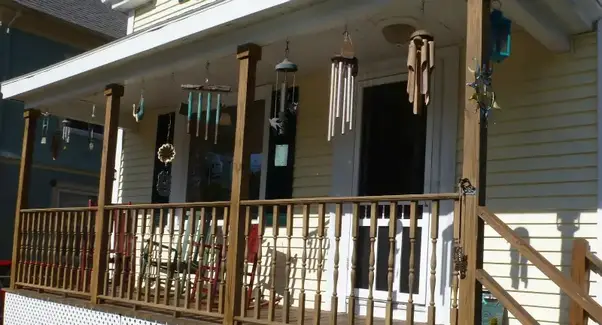
Wind chimes are also excellent ways to get rid of birds on the porch. It’s a bird scare due to the sound it produces when it’s hit by a breeze. You can also choose one with shiny chimes to reflect light and discourage birds from landing on your porch.
Wind chimes are good options aside from distress signals since it produces sounds that are pleasant to the ear. The higher the sound produced, the better. You can also come up with a DIY chime using old CDs and other sparkly material.
This method of sending birds away from your porch works on pigeons, brown grass birds, and other smaller fowls.
7. BRING OUT THE OWL
Larger birds like crows and feral pigeons tend to ignore some scare methods. If this happens, you can get an owl replica with haunting eyes to drive them off. This will simulate the presence of a predator which will scare the birds. The trick here is to consistently change the placement of the owl every day so the scare will work as long as it can. Crows are pretty smart birds and they can detect a decoy scare if it doesn’t change positions.
One of the ways to get rid of birds on the porch is the Visual Scare Horned Owl Deterrent. Unlike other owl models, this has moving wings and floating-like feature when mounted on a bar. It has a 44-inch wingspan complete with a simple mechanical system that will allow it to flap if wind-blown. Place this on your porch and even a human will mistake it for a real owl!
8. LET THE CATS TAKE OVER
Nothing beats the presence of a real predator when it comes to sending the birds away from your porch. Letting your cat/s or dogs roam your doorway is a guaranteed way to reduce the droppings and damage the fowls can incur to your house. It also helps to install catwalks on your porch or place a sleeping rug where the cat can cozy up.
You may see some dead birds on the first days when the fowls are yet to discover the hunting threat of your furball. However, the problem arises when the cats get used to the birds that they no longer chase it anymore. This is the reason why you shouldn’t stop using deterrents aside from letting your line of defense wander on the porch.
9. MIRROR, MIRROR ON THE WALL
In case you wouldn’t want to let your pets stay outside, say it’s a rainy day or it’s too hot for the furball, you can place a mirror on it. If you want, you can add glass elements on your doorway as ways to get rid of birds on the porch. Placing small but multiple mirrors on your porch will serve as a reflective method that will annoy the birds. You can place this small mirrors on the sills, so sunlight will directly hit it during the day.
You can also add this to the wall if the light hits on it directly. It works most of the time, but to be sure, it’s best to pair it with other methods and products I mentioned here. Just experiment and you’ll find what works for your porch.
10. SPRAY SOME CITRUSY REPELLENT
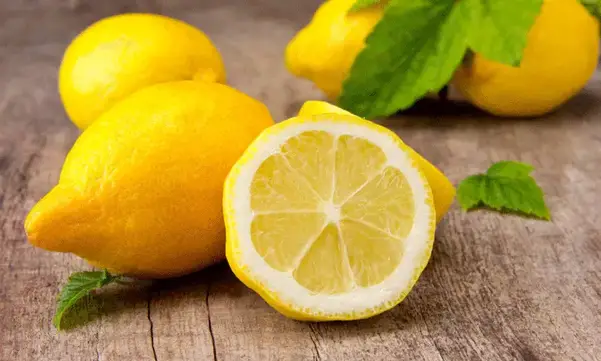
Birds hate citrusy fragrances and spraying it on your porch will be an effortless move to annoy them. You make your doorway smell good and you drive away the pesky birds. A double win for you. You can opt for lemon juice diluted in water or purchase a formula specific for repelling birds. But for a natural and non-toxic method, I’ll choose the lemon option especially if there are protected birds visiting your porch.
Just squeeze a lemon and add a little water. Spray it like an air fresher and you have guaranteed ways to get rid of birds on the porch. You can also place slices of lemon on your porch to make the smell stronger. It will also help in fighting off the smell of bird droppings left on your porch after cleaning.
11. MAKE THE SURFACE STICKY
Annoying the birds isn’t difficult. All you have to do is make it difficult for them to land, perch, or roost on a surface. You can install bird spikes for sure but in case the surface won’t allow, a bird gel repellent will save the day.
If you don’t want the birds to get stuck, just apply it thinly on the sills of your porch. Make sure to use a pair of gloves as the gel is really sticky and it can put you in a washing spree if you’re not careful.
12. REMOVE ATTRACTANTS FROM YOUR PORCH
This point is somewhat a summary of all the discussed ideas above. Birds are attracted to your porch for some reasons and it’s your task to identify it and get rid of it fast. If you keep feeding the birds, you’re fueling your problem. Stop this habit and send the birds away with humane methods that won’t kill or harm them.
Before performing the ways to get rid of birds on the porch, remember that some birds like woodpeckers are protected by federal law. You will be fined due to a wrongful death of a bird on your property. Just the right hacks and a little patience will stop the fowls from throwing a feat on your porch. The droppings will soon be over and your doorway will be quiet and free of poop.
Source
Pigeon Patrol Products & Services is the leading manufacturer and distributor of bird deterrent (control) products in Canada. Pigeon Patrol products have solved pest bird problems in industrial, commercial, and residential settings since 2000, by using safe and humane bird deterrents with only bird and animal friendly solutions. At Pigeon Patrol, we manufacture and offer a variety of bird deterrents, ranging from Ultra-flex Bird Spikes with UV protection, Bird Netting, 4-S Bird Gel and the best Ultrasonic and audible sound devices on the market today.
Voted Best Canadian wholesaler for Bird Deterrent products ten years in a row.
Contact us at 1- 877– 4– NO-BIRD, (604) 585-9279 or visit our website at www.pigeonpatrol.ca
Pigeon/Pigeon Patrol / Pigeons Roosting / Vancouver Pigeon Control /Bird Spikes / Bird Control / Bird Deterrent / Pigeon Deterrent? Surrey Pigeon Control / Pest /Seagull deterrent / Vancouver Pigeon Blog / Birds Inside Home / Pigeons in the cities / Ice Pigeons/ What to do about pigeons/ sparrows , Damage by Sparrows, How To Keep Raccoons Away, Why Are Raccoons Considered Pests/ De-fence / Pigeon Nesting/ Bird Droppings / Pigeon Dropping/ woodpecker control/ Professional Bird Control Company/ Keep The Birds Away/ Birds/rats/ seagull/pigeon/woodpecker/ dove/sparrow/pidgeon control/pidgeon problem/ pidgeon control/flying rats/ pigeon Problems/ bird netting/bird gel/bird spray/bird nails/ bird guard
by Pigeon Patrol | Oct 14, 2021 | history of pigeons, MBCA, pet bird, Pigeon Control, Pigeon Droppings, Pigeon Patrol's Services
The Fall season for many people means Pumpkin Spice, a crisp breeze, and crunchy leaves. In pest control, it means pigeon-breeding season. Empower yourselves and recognize the common myths about pigeon control.
Common Misconceptions When it Comes to Pigeons
FICTION: There is no harm in feeding pigeons. It doesn’t hurt anybody.
FACT: Regardless of whether or not feeding is intentional, it is the root of many pigeon control problems! The birds recognize a food source as reliable and, quickly, their numbers multiply. Unintentional food supply, like litter and garbage, MUST be eliminated in order to be protected against the many problems pigeons cause. Aside from structural damage caused to buildings or homes, other pests may live on these birds, including mites, fleas or ticks, which could further pest problems at the infested property. Pigeons are dependent on humans in almost every aspect- relying on us for food and nesting sites. Knowing this, we can better prepare ourselves for use of effective pigeon  control methods.
FICTION: Bird Spikes are vicious.
FACT: Advanced IPM professionals are skilled in using spikes effectively for bird control – preventing birds from landing or roosting on buildings or homes. Spike styles with blunted ends are used often, and the installation of such spikes is precise. For that reason, these spikes do not pose a threat and will not endanger the birds.
FICTION: The only way to control pigeons is to wipe all of them out.
FACT: Destroying the pigeon population in large quantities only creates pressure for the birds to reproduce rapidly. The most effective way to manage pigeon infestations is by making roosting and nesting areas inhospitable. Methods of doing so include, but are not limited to, exclusion, filling access voids, and sloping resting areas.
Source
Pigeon Patrol Products & Services is the leading manufacturer and distributor of bird deterrent (control) products in Canada. Pigeon Patrol products have solved pest bird problems in industrial, commercial, and residential settings since 2000, by using safe and humane bird deterrents with only bird and animal friendly solutions. At Pigeon Patrol, we manufacture and offer a variety of bird deterrents, ranging from Ultra-flex Bird Spikes with UV protection, Bird Netting, 4-S Bird Gel and the best Ultrasonic and audible sound devices on the market today.
Voted Best Canadian wholesaler for Bird Deterrent products ten years in a row.
Contact us at 1- 877– 4– NO-BIRD, (604) 585-9279 or visit our website at www.pigeonpatrol.ca
Pigeon/Pigeon Patrol / Pigeons Roosting / Vancouver Pigeon Control /Bird Spikes / Bird Control / Bird Deterrent / Pigeon Deterrent? Surrey Pigeon Control / Pest /Seagull deterrent / Vancouver Pigeon Blog / Birds Inside Home / Pigeons in the cities / Ice Pigeons/ What to do about pigeons/ sparrows , Damage by Sparrows, How To Keep Raccoons Away, Why Are Raccoons Considered Pests/ De-fence / Pigeon Nesting/ Bird Droppings / Pigeon Dropping/ woodpecker control/ Professional Bird Control Company/ Keep The Birds Away/ Birds/rats/ seagull/pigeon/woodpecker/ dove/sparrow/pidgeon control/pidgeon problem/ pidgeon control/flying rats/ pigeon Problems/ bird netting/bird gel/bird spray/bird nails/ bird guard
by Pigeon Patrol | Oct 14, 2021 | 4-S Gel Bird repellent, Animal Deterrent Products, Bird Deterrent Products, Bird Netting, Pigeon Control, Pigeon Droppings
The fearless, pesky, pervasive pigeon
The pigeon-bird was raised for food in America since the 1600s, but grew so fast and multiplied so rapidly that they have formed feral, fierce populations in all their major cities.
This is a huge problem in India too, as most people feed pigeons: since they do not fear humans and eat only grains, seeds or breadcrumbs, they are considered pets.
However, this pigeon bird is actually a dirty, filthy menace; a pest that messes up statues, homes, and balconies with stinking, gooey droppings.
But that’s not all! Pigeons are a real nuisance: they damage your property, break-in by breaking window-glasses and carry a host of dangerous pigeon borne diseases and parasites.
Some people, who are ignorant of science, medicine, and pigeon borne diseases even build pigeon-houses for them! Pesky, pervasive, disease-carrying pigeons: how do they rule the roost in our cities?
As the pigeon-bird population grows, the nestlings return to their homes to build more pigeon nests and raise more pigeons (on ledges, balconies, gables, pipes. They always, always find their way home.
Pigeon droppings are tar-like and heavy as a binding agent (like mortar) for their pigeon nests: it is extremely difficult to remove.
Pigeon droppings and nests do more than dirty and stink up a place: Â they clog gutters, pipes, eaves, and water-spouts degrading your property. Pigeons are bad for business especially the food or hotel industry. They are bully-birds who keep smaller song-birds (like bulbuls) away!
How to scare pigeons or keep pigeons away
Pigeons do not like wind-chimes, aluminium foil-pans (as used for fast food), shiny rubber snakes or balloons. Some commercial gel bird-repellents will keep pigeons away but must be constantly replenished.
Pigeon nets for balconies are advised, but most netting sags and gives way: pigeons peck holes in them too. How to get rid of pigeons poses a vexatious problem as most solutions are stop-gap measures.
Some people attach new-fangled coiled “slinky toys on balcony rails to deter pigeons from finding a comfy spot! Mesh screens also act well.
There are some organic, home-made pigeon repellents that are effective in keeping pigeons away from balcony or windows sill.
Place pomanders (cheesecloth pouches)| of cayenne pepper, black pepper, chilli powder or strong spice powder mix along railings or window sills. Keep your trash covered and do not keep scrap or bird-feeders handy for pigeons.
How to clean up the pigeon-bird mess
You can’t simply hose off lethal, heavy pigeon poo. Bacteria, viruses, and fungi love pigeon droppings. Wear a mask and gloves to remove debris and throw the pigeon-bird nests away. Next, with a strong anti-bacterial cleaner, or chlorine bleach, scrub the area with the utmost care. Then hose off the dust.
What is the safest, permanent solution for pigeon birds?
Some people swear by chilli-powder or honey. Bird-netting is better, but there are many varieties. If you have a business that is getting affected or stay in a tall high-rise, where you can’t reach pipes and ledges where pigeon-birds root, breed and defecate.
Finally, do discourage people from feeding these nasty, disease-carrying pigeon-birds, so that the next generation is free from this menace.
Source
Pigeon Patrol Products & Services is the leading manufacturer and distributor of bird deterrent (control) products in Canada. Pigeon Patrol products have solved pest bird problems in industrial, commercial, and residential settings since 2000, by using safe and humane bird deterrents with only bird and animal friendly solutions. At Pigeon Patrol, we manufacture and offer a variety of bird deterrents, ranging from Ultra-flex Bird Spikes with UV protection, Bird Netting, 4-S Bird Gel and the best Ultrasonic and audible sound devices on the market today.
Voted Best Canadian wholesaler for Bird Deterrent products ten years in a row.
Contact us at 1- 877– 4– NO-BIRD, (604) 585-9279 or visit our website at www.pigeonpatrol.ca
Pigeon/Pigeon Patrol / Pigeons Roosting / Vancouver Pigeon Control /Bird Spikes / Bird Control / Bird Deterrent / Pigeon Deterrent? Surrey Pigeon Control / Pest /Seagull deterrent / Vancouver Pigeon Blog / Birds Inside Home / Pigeons in the cities / Ice Pigeons/ What to do about pigeons/ sparrows , Damage by Sparrows, How To Keep Raccoons Away, Why Are Raccoons Considered Pests/ De-fence / Pigeon Nesting/ Bird Droppings / Pigeon Dropping/ woodpecker control/ Professional Bird Control Company/ Keep The Birds Away/ Birds/rats/ seagull/pigeon/woodpecker/ dove/sparrow/pidgeon control/pidgeon problem/ pidgeon control/flying rats/ pigeon Problems/ bird netting/bird gel/bird spray/bird nails/ bird guard
by Pigeon Patrol | Oct 14, 2021 | pet bird, Pigeon Control, Pigeon Droppings, Pigeon Patrol's Services, Pigeon Predators
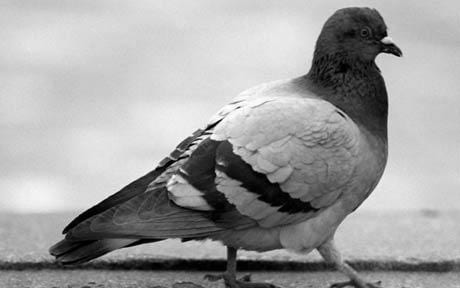
Feral pigeons foul buildings, creating unwanted “stained glass” windows and “decorated” architecture. All sorts of pests may migrate from their nests into buildings. Originally descended from the wild Rock Dove, a cliff-face dweller, these birds find the next best thing is a block of flats, a bit of Victorian Gothic architecture or a railway arch.
In the absence of natural predators, birds which fall sick survive to infect healthy ones with ornithosis and other diseases, some of which can be transmissible to man. Their accumulated droppings are also sources of disease.
Birds such as Pigeons carry a variety of diseases such as Ornithosis, Listeria and E-coli that can be transmitted to man not only from the droppings but also the birds themselves. When dry, pigeon droppings can become airborne in small particles, which can lead to respiratory complaints such as psittacosis.
Pigeon droppings are acidic and can corrode/erode metals, stonework and brickwork. Nesting materials birds use can block chimneys, flues and guttering, causing possible issues with carbon monoxide and damage to buildings as water overflows from blocked gutters.
Buildings covered in fouling looks unpleasant can smell, and projects a poor image of business, potentially ruining an organisation’s reputation. If customers spot evidence of a heavy Pigeon infestation on premises, they may not want to do business with you.
Closely linked to Pigeon activity such as nesting are parasites such as mites, ticks, fleas and beetles. So if you have a current or past problem with birds and have done nothing, you may find you’ll suffer from a parasite infestation too.
How to prevent and get rid of birds
Pigeon prevention, proofing and control are a highly specialised skill, requiring specialist equipment and tools. Control of Pigeons through population reduction techniques is generally both less desirable and less effective than removing their food sources or blocking off sites where they perch or roost. The latter technique, known as proofing, is now used extensively.
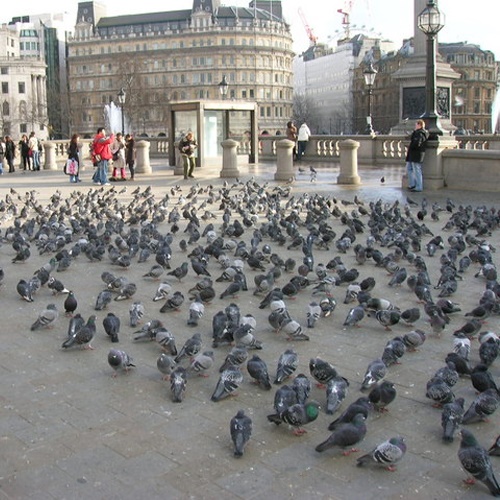
For proofing, professional pest controllers will use methods such as barriers, spikes, nets and wire to great effect. More recently active systems like shock strips, audible scarers and optical gels have been used to create negative associations in birds wishing to land or roost on buildings. All of these methods of proofing have their merits, and some can offer a stronger and more lasting deterrent, but as with any method of control, they may become less effective over an extended period. For a heavy Pigeon infestation, your professional contractor may have to employ methods of control such as shooting, trapping or flying of predatory birds.
Having problems with Pigeons?
Use a trained professional pest controller.
Source
Pigeon Patrol Products & Services is the leading manufacturer and distributor of bird deterrent (control) products in Canada. Pigeon Patrol products have solved pest bird problems in industrial, commercial, and residential settings since 2000, by using safe and humane bird deterrents with only bird and animal friendly solutions. At Pigeon Patrol, we manufacture and offer a variety of bird deterrents, ranging from Ultra-flex Bird Spikes with UV protection, Bird Netting, 4-S Bird Gel and the best Ultrasonic and audible sound devices on the market today.
Voted Best Canadian wholesaler for Bird Deterrent products ten years in a row.
Contact us at 1- 877– 4– NO-BIRD, (604) 585-9279 or visit our website at www.pigeonpatrol.ca
Pigeon/Pigeon Patrol / Pigeons Roosting / Vancouver Pigeon Control /Bird Spikes / Bird Control / Bird Deterrent / Pigeon Deterrent? Surrey Pigeon Control / Pest /Seagull deterrent / Vancouver Pigeon Blog / Birds Inside Home / Pigeons in the cities / Ice Pigeons/ What to do about pigeons/ sparrows , Damage by Sparrows, How To Keep Raccoons Away, Why Are Raccoons Considered Pests/ De-fence / Pigeon Nesting/ Bird Droppings / Pigeon Dropping/ woodpecker control/ Professional Bird Control Company/ Keep The Birds Away/ Birds/rats/ seagull/pigeon/woodpecker/ dove/sparrow/pidgeon control/pidgeon problem/ pidgeon control/flying rats/ pigeon Problems/ bird netting/bird gel/bird spray/bird nails/ bird guard
by Pigeon Patrol | Oct 14, 2021 | Pigeon Spikes, Pigeons, Pigeons in the News, Raccoons, Sparrows
With a warm spell of weather predicted, staff from Cleankill Pest Control are gearing up for more calls to deal with the bird they call the ‘flying rat’.
Pigeons take advantage of the warmer weather to sit on outside ledges and pipework while their foulings fall to the floor below, creating a dangerously slippery surface.
Cleankill Managing Director Paul Bates said: “With pigeons now breeding four or five times a year, compared to two or three times 20 years ago, their numbers are increasing dramatically. The problem is exacerbated by people feeding them and attracting them into town squares where they are fouling on pavements and buildings.
“Pigeons are the most unhygienic and messy birds and actually carry more diseases than rats. They nest on their poo and attract mites. Nearly all pigeons carry the bird mite – a tiny insect that feeds off the bird, but will also makes humans itch and scratch. Pigeon fouling and nest materials also provide a home for many other insects such as clothes moths, carpet beetle and mealworm beetles.
Most of the pest controllers’ work against pigeons tends to be proofing of buildings and light wells, using a variety of techniques including installing nets, sprung wire systems and bird spike repellents.
Paul explained: “If a slipped tile goes unnoticed on a roof, or the louvres slip on a church bell tower, a pair of pigeons can get in and, in a matter of months, there can be hundreds of pigeons living in the loft space. The floor will soon be covered with fouling up to a foot deep.res further ‘natural-style’ habitats for these descendants of the Rock Dove – ll then have health and safety implications for engineers who come to service the equipment.
“Pigeon poo, when it is wet, is not too much of a danger apart from being slippery and the acidity will, of course, burn car paintwork. But when it is dry, as it often is in a loft space, or below sheltered machinery, then the airborne bacteria can become a real problem – affecting anybody that may be susceptible to asthma and other breathing difficulties.”
When pest controllers are called in, wearing special safety gear, they have to remove the birds, the nests and all loose fouling. The places they have to get to are often difficult to access, very restricted, very hot loft spaces that are about four-feet high – which is one of the reasons they dislike pigeons so much.
Cleankill Pest Control offers a specialist bird control service for facilities and property management companies in London, Sussex. Surrey and Kent, from the initial survey and specification through to the final proofing solution. As registered waste carriers, Cleankill can carry out full scale removal of bird fouling, as well as contaminated goods and furniture, from infested properties. As well as the feral pigeon, seagulls are becoming a greater problem for property owners and Cleankill can also offer advice and solutions for these pests as well.
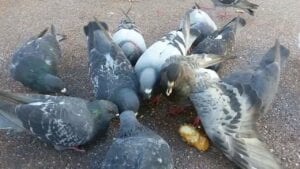
Some facts about pigeons:
• A pigeon aged between 1 and 30 days is called a squab
• A pigeon’s white feathers have no colour pigment
• Pigeons can see in colour, but can also see ultra-violet light – a part of the light spectrum that humans cannot see
• Most birds take a sip of water and throw their heads back so it trickles down their throat – pigeons suck up water like straws
• In the 16th century, pigeon poo was a highly valued commodity as it was a source of salt petre or Potassium nitrate – a main ingredient of gunpowder! In France, it was also used to fertilise vineyards
• In India, the pigeon post mail service stopped in 2004
• Cher Ami and GI Joe were two famous war hero pigeons…both saved the lives of many soldiers by carrying important messages across enemy lines
• Young pigeons remain in their nests for up to two months…which is why it is only pest controllers who often get to see them!
• Peregrine Falcons are a natural predator of the pigeon…they can dive at up to 200 miles per hour. A pigeon can dive at about 70 miles an hour.
Source
Pigeon Patrol Products & Services is the leading manufacturer and distributor of bird deterrent (control) products in Canada. Pigeon Patrol products have solved pest bird problems in industrial, commercial, and residential settings since 2000, by using safe and humane bird deterrents with only bird and animal friendly solutions. At Pigeon Patrol, we manufacture and offer a variety of bird deterrents, ranging from Ultra-flex Bird Spikes with UV protection, Bird Netting, 4-S Bird Gel and the best Ultrasonic and audible sound devices on the market today.
Voted Best Canadian wholesaler for Bird Deterrent products ten years in a row.
Contact us at 1- 877– 4– NO-BIRD, (604) 585-9279 or visit our website at www.pigeonpatrol.ca
Pigeon/Pigeon Patrol / Pigeons Roosting / Vancouver Pigeon Control /Bird Spikes / Bird Control / Bird Deterrent / Pigeon Deterrent? Surrey Pigeon Control / Pest /Seagull deterrent / Vancouver Pigeon Blog / Birds Inside Home / Pigeons in the cities / Ice Pigeons/ What to do about pigeons/ sparrows , Damage by Sparrows, How To Keep Raccoons Away, Why Are Raccoons Considered Pests/ De-fence / Pigeon Nesting/ Bird Droppings / Pigeon Dropping/ woodpecker control/ Professional Bird Control Company/ Keep The Birds Away/ Birds/rats/ seagull/pigeon/woodpecker/ dove/sparrow/pidgeon control/pidgeon problem/ pidgeon control/flying rats/ pigeon Problems/ bird netting/bird gel/bird spray/bird nails/ bird guard